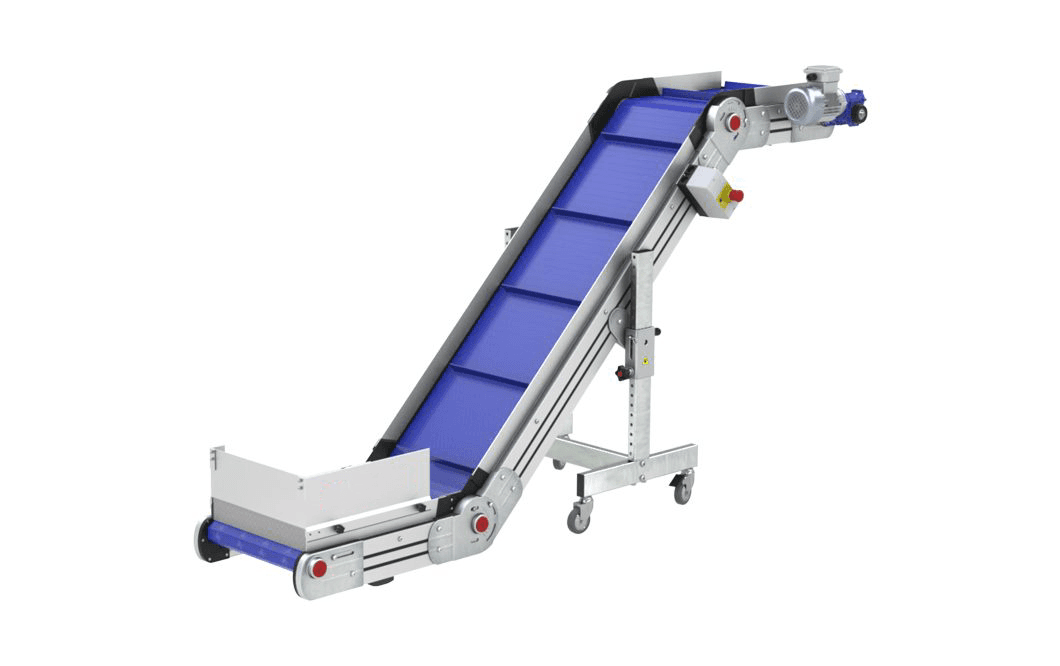
Heavy-Load Deck
A rigid, chain-driven slat surface carries concentrated point loads and heavy unit weights that would flatten, stretch, or tear a rubber belt.
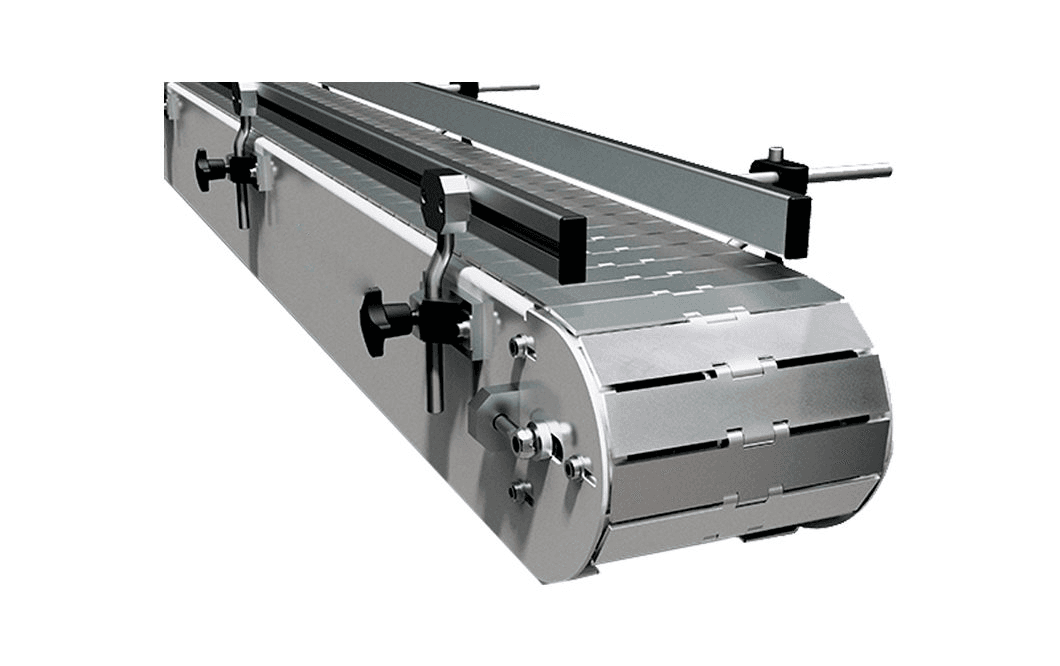
Probe's slat chain conveyors carry loads a belt can't take: heavy, hot, oily, abrasive or awkwardly shaped. A rigid deck of steel, stainless or plastic slats rides on a positively driven chain, giving a flat working surface for assembly, glass, ceramics, foundry and bottling lines in the UAE and GCC.
Overview
When the load is too heavy, too hot, too sharp, or too oily for a rubber belt, the answer is a slat conveyor. Rigid steel or plastic slats are bolted to a driven chain to form a flat, load-bearing deck that keeps moving under punishment that would gouge, stretch, or melt a conventional belt.
Because it’s chain-driven and positively engaged, a slat conveyor carries concentrated point loads and irregular shapes at a steady, controlled pace — which is exactly why it underpins automotive assembly lines, engine build, and heavy sub-assembly work where product rides the deck through the whole process.
Probe specifies the slat material to the job: steel or stainless for hot castings, sharp swarf, and washdown, or hard-wearing plastic for glass, PET, and canning lines where a quieter, corrosion-free surface matters. Slat pitch and chain are sized to the weight so the deck runs flat and true for years.
The engineering choices that make the slat chain conveyors the right call for the job it’s built for.
A rigid, chain-driven slat surface carries concentrated point loads and heavy unit weights that would flatten, stretch, or tear a rubber belt.
Steel slats shrug off hot castings, sharp swarf, oil, and grit; the deck keeps its shape where abrasion and temperature destroy fabric belts.
A flat, gap-free deck supports irregular, unstable, or bulky items that won’t sit on rollers or a narrow belt.
Steel and stainless for heat and washdown, hard-wearing plastic for glass, PET, and canning — the slat is chosen for the product and environment.
Specification
Indicative build parameters. Every system is engineered to your product, throughput, and facility — final specification is confirmed at the audit.
Typical roles the slat chain conveyors takes on across UAE production and distribution lines.
Explore further
What operations most often ask before specifying a slat chain conveyors for their line.
Choose slats when a rubber belt won’t survive the load — heavy point loads, hot castings, sharp swarf, oil, or awkward shapes. The rigid chain-driven deck carries and outlasts what would crush, stretch, or cut a conventional belt.
Steel for heavy and hot loads, stainless steel for corrosive or hygienic areas, and engineered plastic for lighter, quieter duties such as bottling. We choose the material to suit your load, temperature and cleaning needs.
Yes. The flat, rigid deck gives a stable surface, so operators can assemble, inspect or pack product as it moves at a steady, controlled speed.
Tell Probe your product, throughput, and layout, and we’ll size and build the system around it.