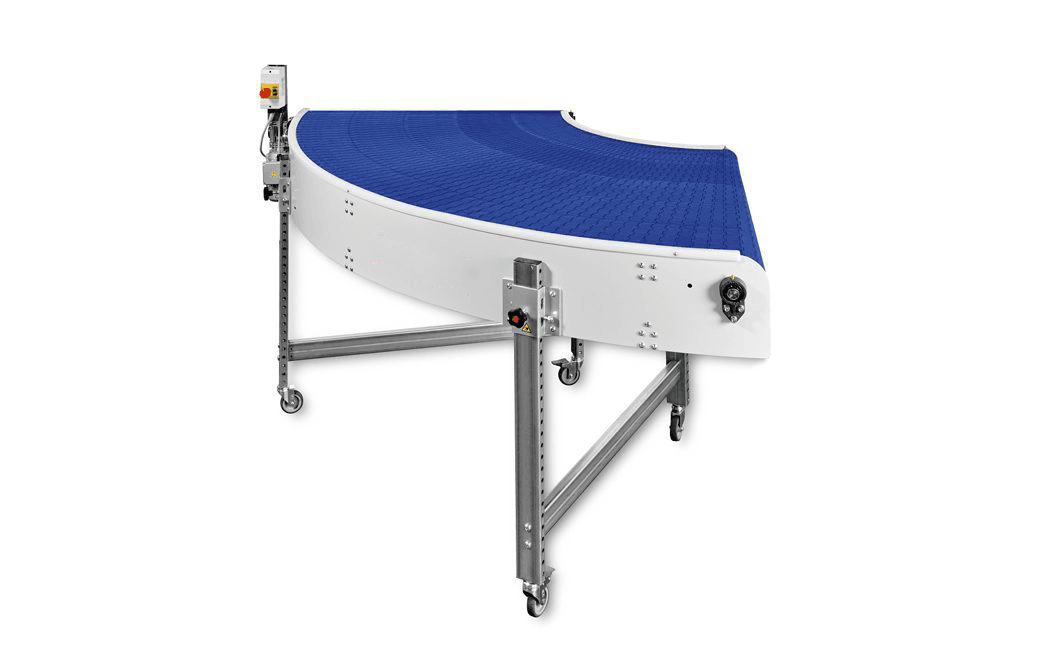
Tool-Free Repair
Damaged modules are knocked out and replaced by hand in minutes with a short length of rod — no belt splicing, no downtime waiting on a moulded replacement.
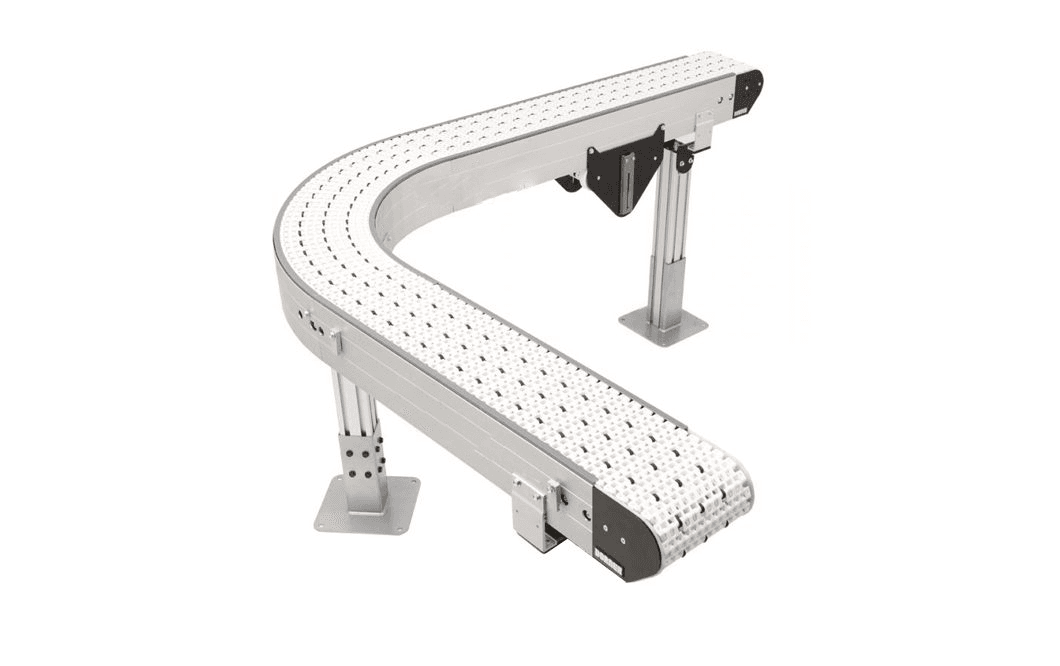
Probe's modular belt conveyors use interlocking plastic modules in food-grade PP, PE or acetal. They stand up to caustic washdown, repair by hand without tools, and can flex around curves on one continuous belt. The right choice for food, dairy, meat and beverage lines in the UAE and GCC.
Overview
A modular belt is built from interlocking plastic modules joined by full-width rods rather than a single moulded band. That construction is what makes it the default choice for wet, hygienic, and heavy-duty lines: if a section is damaged, you pop the rods and rebuild just that stretch by hand — no splicing, no specialist, no belt on order from overseas.
The open or closed module surface drains and cleans freely, and Probe specifies FDA- and EU-compliant materials for direct-food contact, so the same belt survives daily caustic washdown that would delaminate a fabric belt. Rod and module material can be tuned for wear, temperature, or chemical exposure.
Side-flexing versions carry product around curves and inclines on the same continuous plastic surface, and positive sprocket drive means the belt tracks true and won’t slip under load — ideal for accumulating bottles, cans, and packs at speed.
The engineering choices that make the modular belt conveyors the right call for the job it’s built for.
Damaged modules are knocked out and replaced by hand in minutes with a short length of rod — no belt splicing, no downtime waiting on a moulded replacement.
Open-grid modules drain and clean freely in FDA/EU food-grade plastics, standing up to daily caustic washdown that delaminates fabric belts.
The belt is driven by sprocket teeth, not friction, so it tracks true and won’t slip or stretch under heavy or accumulating loads.
Radius-building versions carry product around curves and gentle inclines on one continuous plastic surface, cutting transfers out of complex routes.
Specification
Indicative build parameters. Every system is engineered to your product, throughput, and facility — final specification is confirmed at the audit.
Typical roles the modular belt conveyors takes on across UAE production and distribution lines.
Applications
Explore further
What operations most often ask before specifying a modular belt conveyors for their line.
You push out the connecting rods around the damaged area, drop in replacement modules, and re-insert the rods — all by hand, on site, in minutes. There’s no splicing and no need to replace the whole belt, which is a major advantage over one-piece fabric belts.
Yes. The modules are made from food-grade PP, PE or acetal (POM), and the open design drains and dries quickly. The belt is rated for high-pressure and caustic washdown, so it suits wet and hygienic zones.
Yes, with a side-flexing (radius) belt. It runs straight and curved sections on one continuous belt, so there is no transfer point at the corner.
No. Sprockets engage the belt directly (positive drive), so it cannot slip on the drive the way a friction-driven belt can, and the sprocket teeth keep it running straight.
Tell Probe your product, throughput, and layout, and we’ll size and build the system around it.